Showing posts with label Language Arts. Show all posts

Wednesday, 20 July 2016

it's a love story...


In educational circles, we talk a good talk about “higher level thinking skills.” But we’re not very good at assessing them. Maybe because we still think the goal of assessment is for kids to show us that they know what we taught them. What would it look like if what we really wanted from assessment was to find out what kids know in a more global way? What they understand, infer, and feel about things? What connections they make to other things they know? What they value?

What if it was my job, as a teacher, to get inside the little minds entrusted to me and figure out how they think about things?
___________________________________________________________

I teach grade one in a Catholic school, so of course the story of the Christian Nativity is a major focus in December. I read the kids dozens of different versions of it from a range of beautiful picture books, and from the Bible. Sometimes the story is told from different points of view (eg. that of one or more of the animals in the stable). Sometimes it is told in song. Sometimes it’s not a book, but a movie or a play. Sometimes it is taught and learned through puppets, nativity figures, and rituals.

At the end of it all, what do the kids understand about the Christmas story?

I asked them to draw a picture of the Jesus Christmas story (no Santa Clauses or reindeer), on the front of a Christmas card. I decided to assess their understanding simply by counting the number of characters, settings, and details in their pictures: five or more equalling full marks. It’s not the most comprehensive way of testing, but it is a quick measure of the complexity of their understanding. And it's open-ended.

More importantly than helping me quantify my student’s learning, it was a task that let me see this very old story through young and contemporary eyes. It allowed me to see how each child imagined the story, which is a measure of their reading/listening comprehension, but also of their insight.


From dictionary.com.


Here is some of what I saw. (Please read the captions.)

Two adults, one baby, one manger, one stable, one star
(and a moon!) = full marks.
Drawing ability doesn't need to be a factor in
demonstrating or assessing learning.
There was a long road, a big hotel, and a little stable.
Mary had a baby in a barn. She was not having fun!

Some people saw a big star.
They were amazed and scared.
They wore towels on their heads.
(Different place. Different time. Different fashions.)

The sun was out even though there were stars in the sky.
(Because there is always a sun in the top corner of a picture.)

People in the Bible have circles over their heads.

The Christmas story is a love story!


Note: This approach to assessment could be used with fables and fairy tales too ~ any story of which there are multiple renditions in multiple media. 


SaveSave
SaveSave
SaveSave

Sunday, 26 April 2015

dyeing to know....


I’m in love with teachings that cross over curriculum boundaries. This one hits objectives in Science, Social Studies, Language Arts and Art.

So.

I wanted to dye Easter eggs using natural dyes with my kids this year, but I ran out of time before Easter. I knew I needed to experiment a bit to see what works (as far as both products and processes).

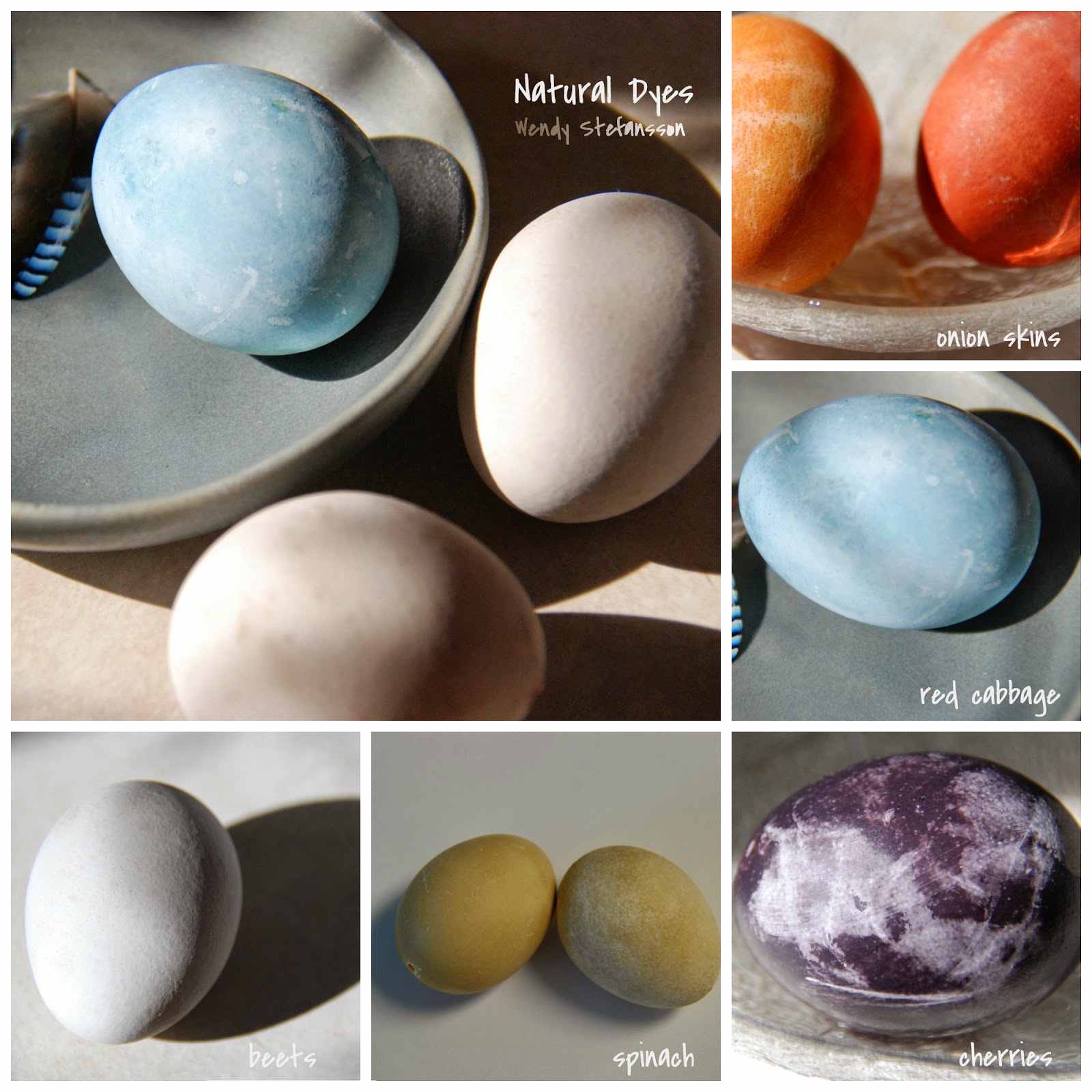
So over the school break I played around in my kitchen at home, making dyes from the following substances: onion skins, red cabbage, beets, spinach, and cherry juice. I won’t go into the how-to’s because they’re on dozens of blogs you can find through Pinterest. But I will say, it takes a surprisingly long time to get colour from natural materials. Most of my eggs were in their dyes for at least 12 hours, and some 18. The onion skins were the fastest; but I never did get colour out of my beets.


When school resumed, I took in the results of my egg-dyeing experiments, along with some raw wool I got from my local museum. I took in a hand-knitted sock (also from the museum, and also made from unprocessed wool). And I set them all up as a provocation with a few questions:

Which dye do you think made which colour? (The big surprise being that “red” cabbage, which is actually purple, dyed the eggs blue.)
What is the material in the bowl? (the raw wool)

The provocation.


Over the course of the week, I revealed the answers to these questions, but many more were asked. We read Weaving the Rainbow by George Ella Lyon, and Charlie Needs a Cloak by Tomie de Paola. We watched videos on youtube that showed spinning and knitting. I showed them slides of my trip to Peru, during which my family visited a small llama/alpaca farm and saw traditional dyeing and weaving being done. We talked about resourcefulness, and how people (“long ago”) would have had to make their own dyes, their own wool or other fibres, and their own clothing out of what they could find or grow locally. 


Then we tried to dye our wool in our natural dyes. The onion skin dye was effective, but nothing else was; even ones that had worked on the egg shells. But that was a good learning moment too. Not everything works the first time you try it. And there once was a world in which everything didn’t come with instructions on the package and money-back guarantees.

We wrote hypothetical letters to our great-grandparents, listing all of the steps they would need to complete if they wanted some new socks for the winter; starting with shearing a sheep and ending with knitting. We talked about how much time and effort that would take, and how precious those socks would be to you; how you would have fewer pairs of socks and how you would darn them if they got a hole in them. And we compared that whole process to our contemporary one: driving to Walmart to buy a pair of socks for a few dollars. Throwing them out when they got holes in them.

We talked about the awesome skills people would have had a few generations back; and about how their lives were harder than ours. How life has changed. We expanded our concepts of “traditional” and “modern,” as well as “natural” and “synthetic,” “transparent” and “opaque,” "paint" and "dye." We compared the vibrant colours of our times with the comparatively muted, watercolour tones of “long, long ago;” as well as the smelliness of things like natural wool and cabbage dye, compared to our scent-censored lives today. We talked about how much itchier and scratchier clothes must have been for our great-grandparents.

Next, we tried our hands at a simple weaving project.